

OEM battery manufacturing machinery helps battery producers improve electrode precision, production consistency, and process efficiency. For lithium-ion battery lines, buyers should evaluate cutting accuracy, automation, mold durability, and customization capabilities. In addition, suppliers should understand electrode processing requirements and provide practical technical support.
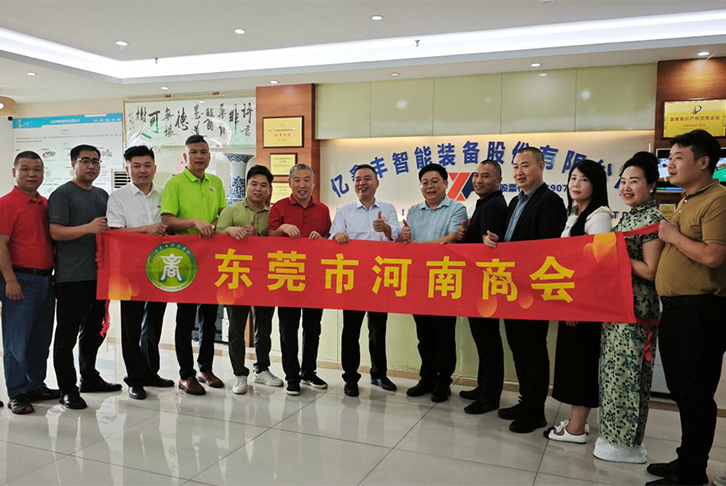
Founded in 2001, Guangdong Yixinfeng Intelligent Equipment Co., Ltd. integrates research and development, production, and sales of lithium battery manufacturing equipment. The company is a national high-tech enterprise and a patent demonstration enterprise authorized by the Guangdong government. Moreover, it has received the “Little Giant” title in recent years. Its core products include die-cutting, winding, slitting, and stacking machines. Therefore, buyers can explore integrated equipment solutions for different battery production processes.
How Can OEM Battery Manufacturing Machinery Improve Cutting Precision?
Electrode cutting accuracy affects material utilization and subsequent assembly. Therefore, buyers should examine the machine structure, feeding stability, and inspection methods. These factors help maintain consistent electrode dimensions throughout production.
How Does the J390D-B Control Cutting Quality?
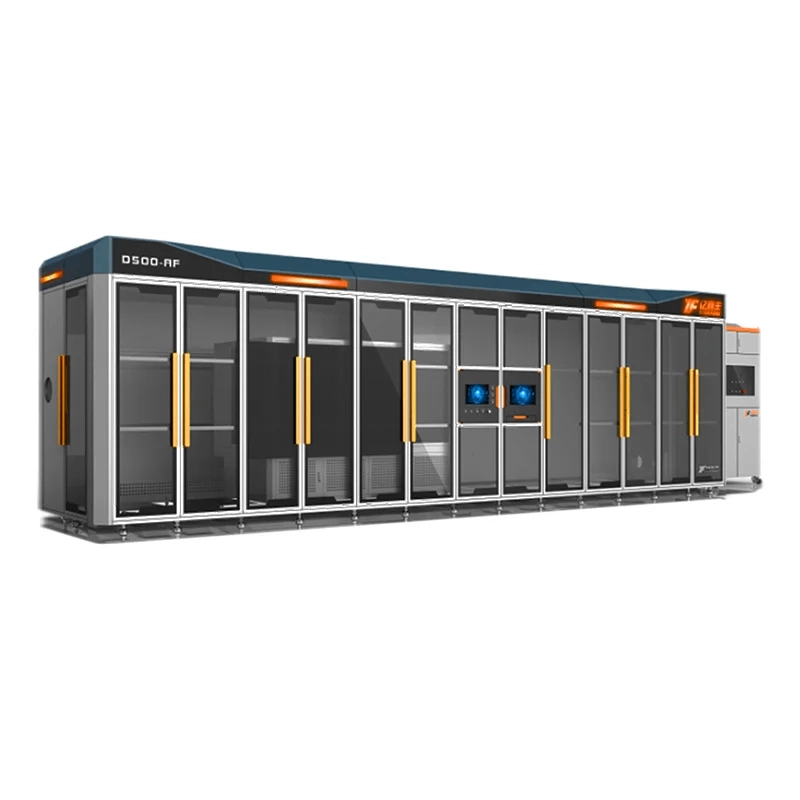
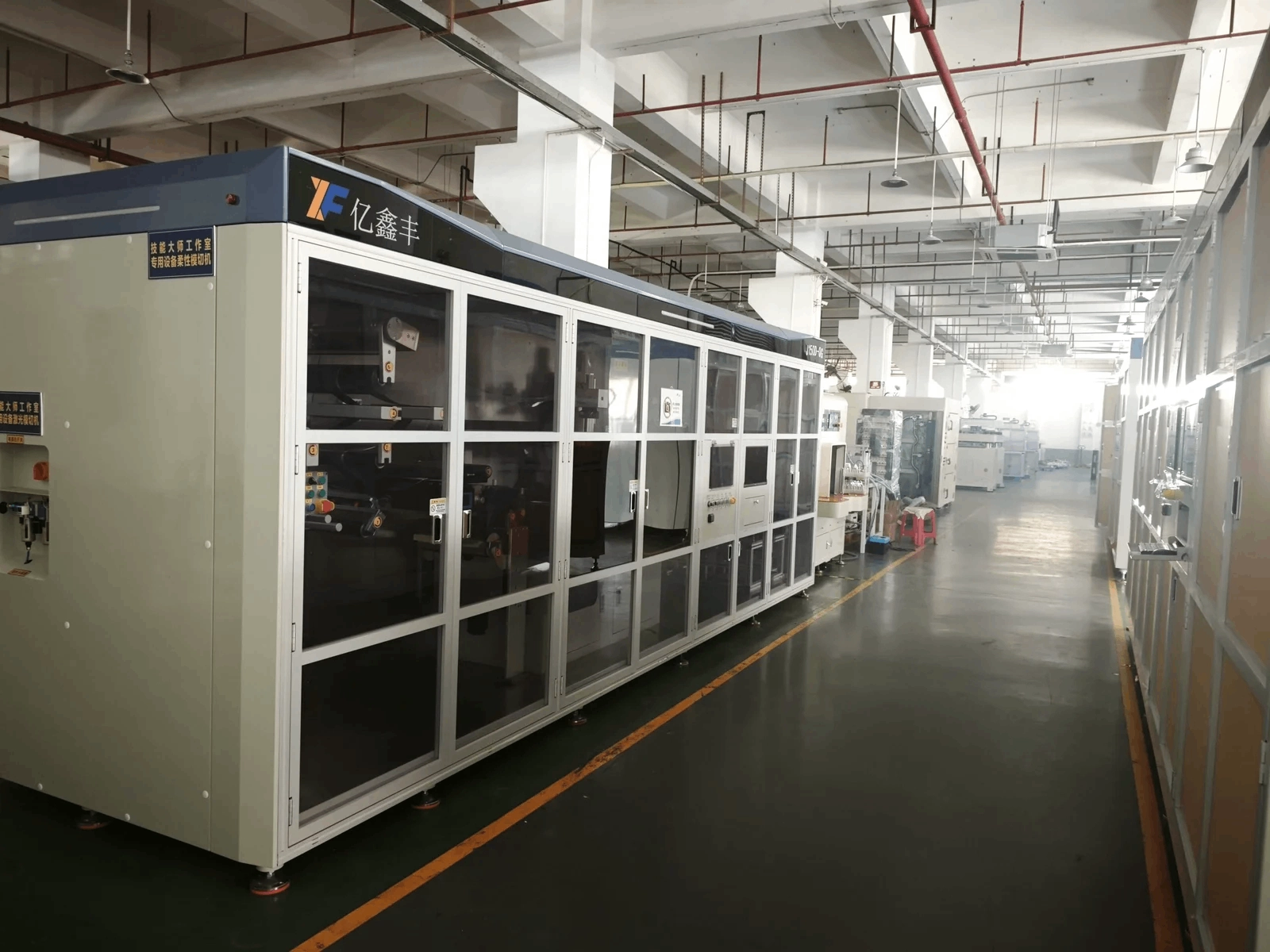
The J390D-B Metal Mold Die-Cutting Machine uses hard metal molds for electrode blanking. Furthermore, its high-precision marble platform supports stable cutting pressure and accurate positioning.
The servo feeding system helps control material movement. Meanwhile, the dual CCD online inspection system identifies specified electrode defects during production. Together, these features support repeatable cutting and more consistent quality control.
However, buyers should validate performance with their actual electrode materials and designs. Sample testing can assess edge quality, dimensional accuracy, and inspection reliability before equipment acceptance.
What Production Capacity Should Buyers Expect?
Production speed influences line planning, labor allocation, and manufacturing costs. However, rated machine speed alone does not determine actual output. Material handling, inspection settings, changeovers, and downstream equipment also affect line performance.
How Does the J390D-B Support Production Efficiency?
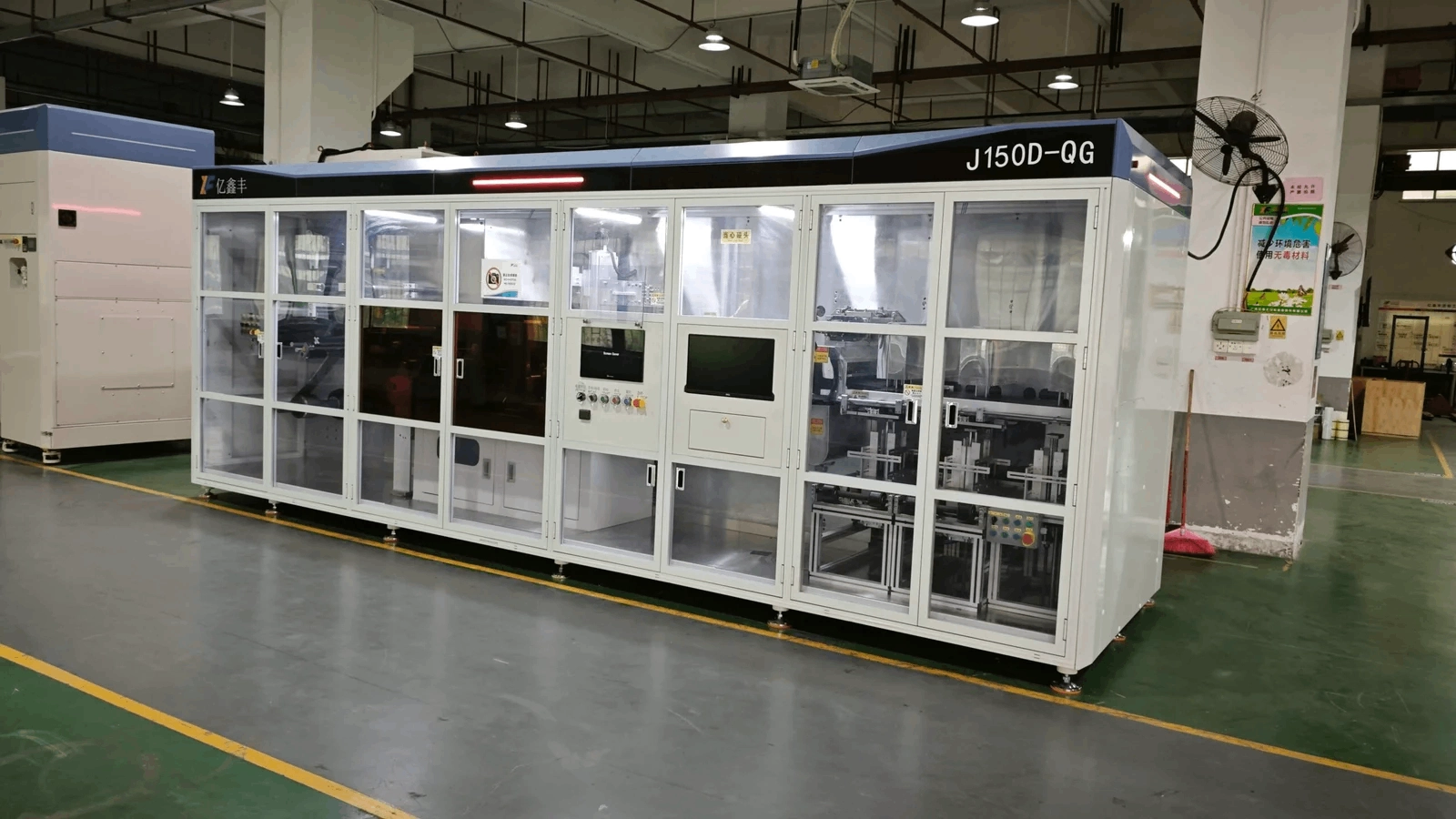
The J390D-B reaches a stated maximum cutting speed of 240 pieces per minute. Additionally, its metal molds support over 10 million cutting cycles, according to the supplied product specifications.
These figures provide useful reference points during equipment evaluation. Nevertheless, actual output depends on electrode dimensions, material properties, operating conditions, and process requirements. Buyers should request application-specific trials before finalizing production targets.
For a broader equipment overview, visit battery manufacturing machine categories to identify machinery suited to different electrode processing stages.
Can Suppliers Customize Equipment for Different Battery Designs?
Battery manufacturers may process electrodes with different dimensions, shapes, and production requirements. Consequently, standard equipment configurations may need adjustments to match specific products. A capable OEM supplier should discuss these requirements before confirming the machine design.
Which Customization Options Should Buyers Discuss?
First, buyers should provide electrode drawings, material specifications, and target production rates. Next, the supplier can assess mold design, feeding requirements, inspection settings, and equipment integration.
For the J390D-B, buyers can discuss the required cutting shape and production workflow. In addition, they should clarify changeover procedures, tooling maintenance, safety requirements, and acceptance criteria.
These discussions help align equipment configuration with actual manufacturing needs. Furthermore, early technical communication reduces uncertainty during installation and commissioning.
Explore technical guides for battery manufacturing to support process planning and equipment evaluation.
How Can Buyers Evaluate Quality and Total Ownership Cost?
For B2B buyers, equipment value involves more than the initial purchase price. Instead, evaluation should include cutting consistency, mold replacement frequency, maintenance requirements, and technical support.
Which Technical Details Deserve Verification?
| Evaluation item | J390D-B stated capability | What buyers should verify |
|---|---|---|
| Cutting speed | Up to 240 pieces per minute | Output with actual electrode designs |
| Mold durability | Over 10 million cutting cycles | Conditions supporting the stated service life |
| Positioning | High-precision marble platform and servo feeding | Accuracy across representative production runs |
| Quality inspection | Dual CCD online inspection | Defect coverage and inspection settings |
| Dust control | Integrated dust control system | Collection requirements and maintenance procedures |
| Compliance documents | Specific certificates not provided in the supplied information | Applicable safety and conformity documents |
Durable molds may help reduce frequent tooling changes. Meanwhile, integrated inspection supports more structured quality management. However, buyers should confirm maintenance schedules, spare-parts availability, and warranty terms before signing contracts.
Yixinfeng also supplies winding, slitting, and stacking equipment. As a result, the company can discuss process coordination across multiple production stages. It has provided equipment or services to battery industry leaders, including CATL, BYD, and EVE Energy.
For international buyers, the supplier should also clarify installation arrangements, operator training, and after-sales response procedures. These details help businesses assess total ownership costs and production readiness.
Q&A: Choosing OEM Battery Manufacturing Machinery
Q1: Can Yixinfeng customize electrode die-cutting equipment?
Yes. Buyers can discuss electrode drawings, cutting requirements, target output, and inspection needs. The engineering team can then assess an appropriate machine configuration.
Q2: Is the J390D-B suitable for every lithium battery production line?
Not necessarily. Its suitability depends on electrode specifications, cell design, and production workflow. Technical evaluation and sample testing help establish application fit.
Q3: How can buyers assess its cost-effectiveness?
Review the cutting rate, mold service life, quality inspection features, and maintenance requirements together. Then compare these factors against actual production targets and operating costs.
Q4: What support can Yixinfeng provide beyond individual machines?
Yixinfeng offers equipment for electrode cutting, winding, slitting, and stacking. Additionally, its one-stop solutions and technical support can help buyers coordinate equipment selection across different battery manufacturing processes.