

For lithium battery manufacturers, choosing the right electrode stacking machine affects production efficiency and cell consistency. A suitable dual-station system helps automate electrode handling, separator folding, and precise layer placement. Moreover, it supports manufacturing requirements for prismatic and pouch lithium-ion cells.
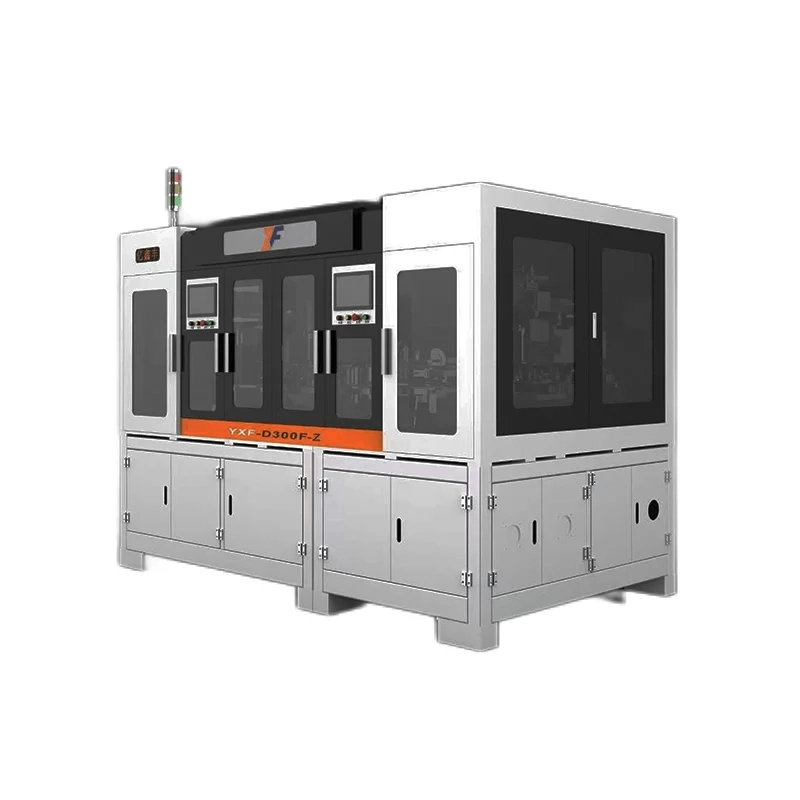
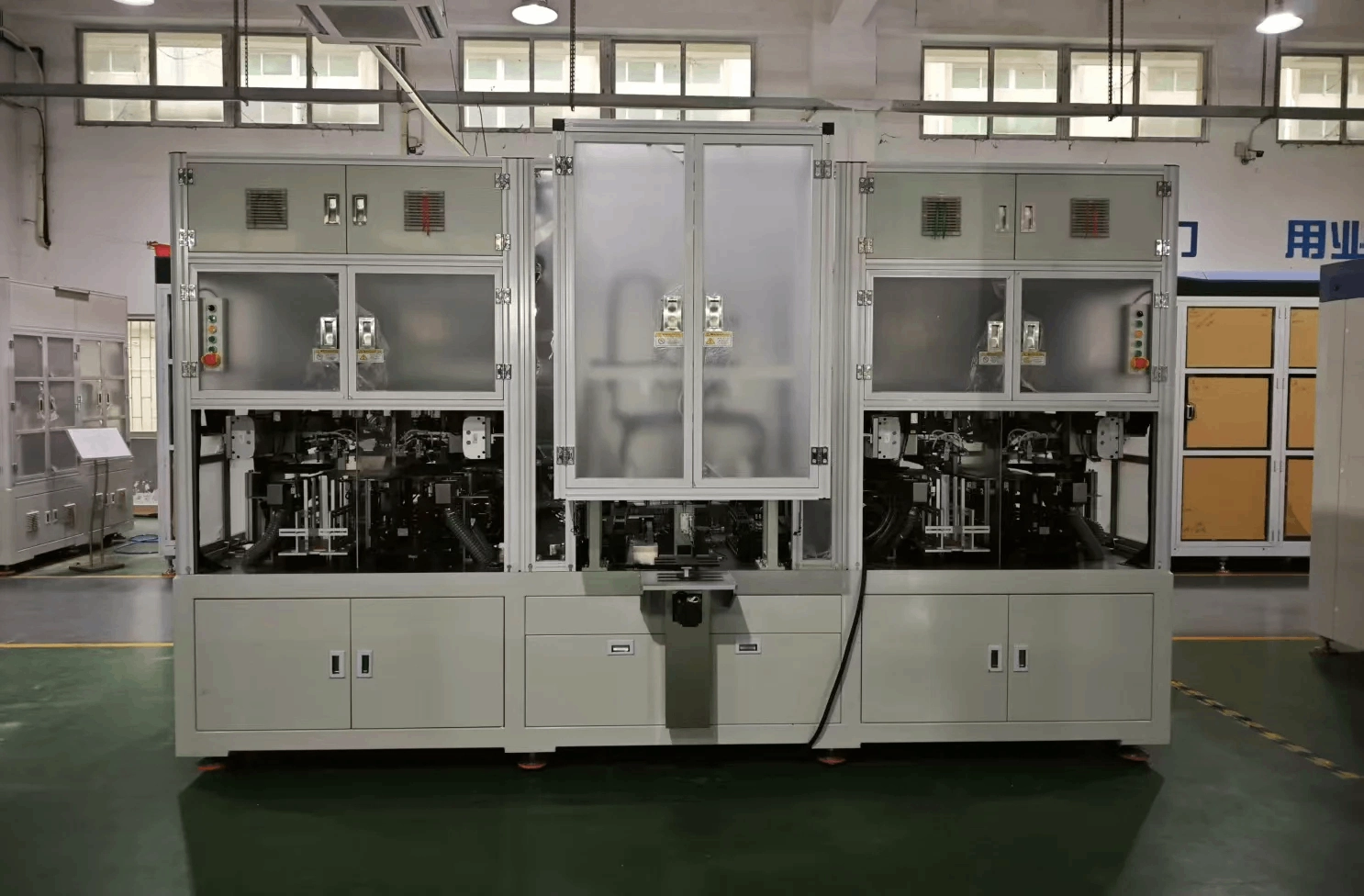
The Double Stations Electrode Sheets Stacking Machine automates anode, cathode, and separator stacking. It uses a Z-fold process to build electrode assemblies. Consequently, manufacturers can integrate automated stacking into battery cell production lines.
However, equipment selection requires more than evaluating cycle speed. Buyers should also assess alignment control, material handling, changeover flexibility, and quality monitoring.
How Can a Dual-Station Stacking Machine Improve Production Efficiency?
Battery manufacturers often need higher throughput while maintaining consistent stacking quality. However, repeated electrode handling creates timing and coordination challenges during production.
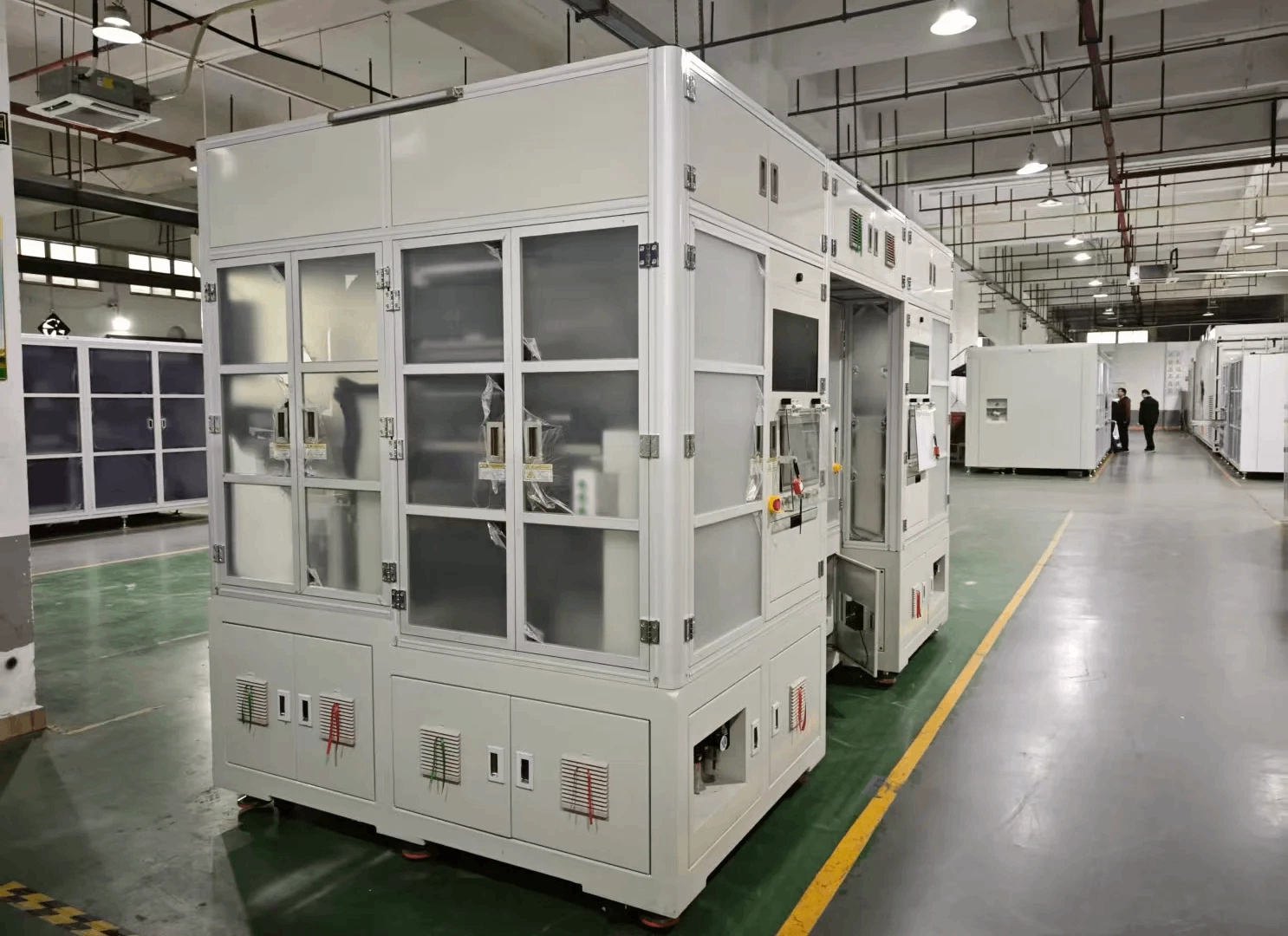
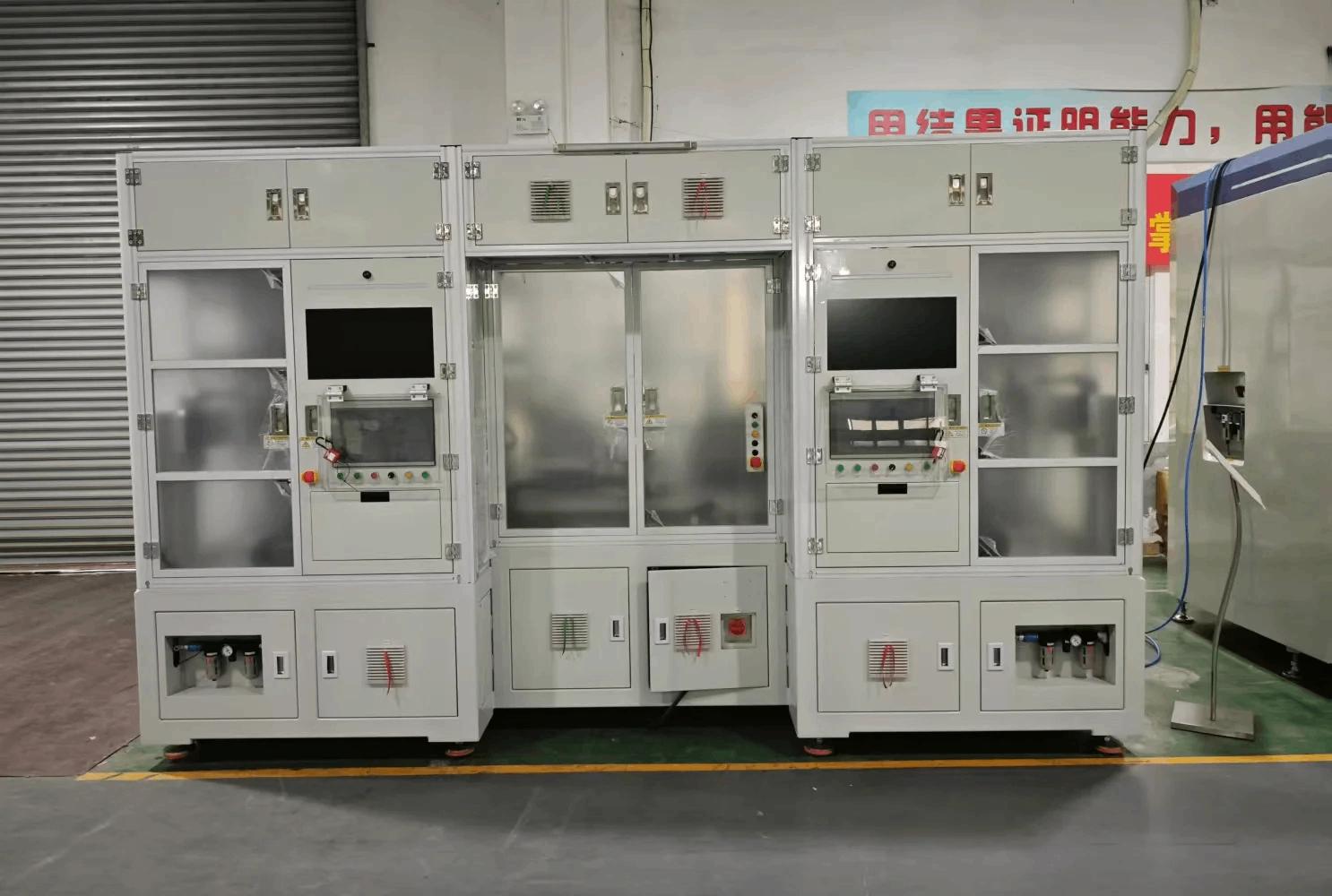
A dual-station machine uses two independent pick-and-place systems. Meanwhile, high-speed linear motor drives coordinate material transfer and stacking operations. This design supports parallelized handling and a more organized production workflow.
The product information cites an example cycle time of 0.2 seconds per piece. However, buyers should clarify the measurement method and operating conditions. Electrode dimensions, stacking recipes, and upstream feeding can affect achievable throughput.
Therefore, request a production trial using representative materials. Additionally, evaluate sustained output rather than relying solely on nominal cycle time. This approach helps manufacturers estimate realistic production capacity.
Why Does Electrode Alignment Matter in Battery Manufacturing?
Electrode stacking requires careful placement of anodes, cathodes, and separators. In Z-folding, the separator folds continuously between alternating electrode sheets. Consequently, alignment and separator handling influence the quality of the completed stack.
Misalignment can create problems during downstream assembly. Therefore, manufacturers should assess the machine’s positioning system and repeatability. They should also verify separator tension and electrode dimensions.
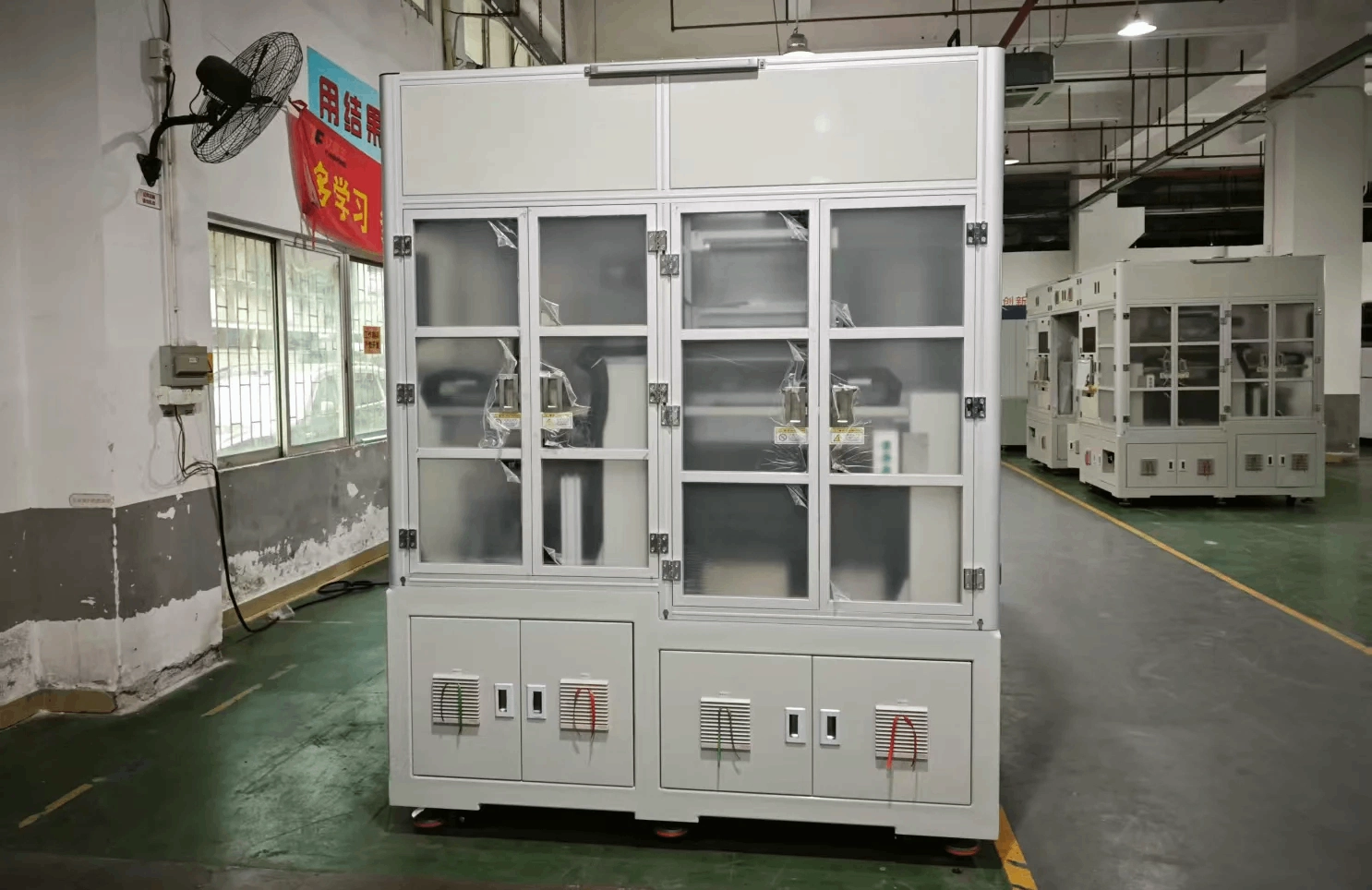
The featured machine uses visual alignment and multi-sensor control. These functions help manage electrode positioning during automated stacking.
However, buyers should request measured alignment tolerances and repeatability data. They should also inspect completed stacks for edge consistency and separator integrity. Furthermore, trial results should reflect the intended cell format and production recipe.
Explore our Battery Manufacturing Equipment for automated electrode processing solutions.
How Can One Machine Support Prismatic and Pouch Cells?
Different battery formats require specific stacking arrangements and electrode dimensions. Therefore, lithium battery manufacturers should confirm equipment compatibility before purchasing.
The featured machine supports prismatic and pouch cell production. Its Z-fold process coordinates electrode placement with separator folding. Additionally, automated handling helps organize repetitive stacking operations.
Before ordering, provide electrode dimensions, layer counts, and separator specifications. Next, confirm fixture requirements and changeover procedures. These details help the supplier assess configuration suitability.
For manufacturers producing several cell formats, changeover efficiency also matters. Consequently, buyers should evaluate tooling adjustments, recipe management, and operator procedures. A practical trial can reveal whether the proposed configuration fits production needs.
Which Technical Features Should Buyers Compare?
A dual-station stacking machine should match the factory’s quality targets and output requirements. Therefore, buyers should compare verified specifications instead of relying on broad performance claims.
The following table summarizes the machine’s stated features and essential evaluation points.
|
Parameter |
Product information |
Buyer evaluation point |
|---|---|---|
|
Application |
Prismatic and pouch cells |
Confirm target cell formats |
|
Stacking process |
Automatic Z-fold stacking |
Verify the required stacking sequence |
|
Material handling |
Anode, cathode, and separator |
Check material compatibility |
|
Station configuration |
Two independent pick-and-place systems |
Assess coordinated operation |
|
Drive system |
High-speed linear motors |
Review motion control performance |
|
Alignment |
Visual alignment and multi-sensor control |
Request measured repeatability data |
|
Example cycle time |
0.2 seconds per piece |
Validate under defined test conditions |
|
Certifications |
Not specified in supplied information |
Request applicable documentation |
In addition, manufacturers should review equipment maintenance and spare-part availability. They should confirm operator training and integration requirements. These considerations help reduce uncertainty during commissioning.
Read our Technical Guide for battery equipment selection and production process planning.
How Can Manufacturers Validate Equipment Before Purchasing?
A supplier’s technical proposal should address real production requirements. Therefore, buyers should establish acceptance criteria before equipment delivery.
First, test the machine using representative electrodes and separators. Next, measure cycle time, alignment consistency, and completed stack quality. Meanwhile, monitor material damage and separator handling.
Finally, review safety functions, maintenance access, and production data collection. Manufacturers should also confirm the supplier’s support during installation and commissioning.
For long-term planning, consider product changeovers and future capacity requirements. Lithium battery manufacturers benefit from selecting equipment that matches current production needs while allowing practical process development.
Ultimately, the right stacking machine combines suitable throughput with repeatable processing and manageable operation. Careful validation helps manufacturers make informed investment decisions.
Q&A: Dual-Station Electrode Stacking Machines
Q1: What does a dual-station stacking machine do?
It automates anode, cathode, and separator stacking. Additionally, its dual-station arrangement supports coordinated material handling during cell assembly.
Q2: Which battery formats does this machine support?
The featured machine supports prismatic and pouch lithium-ion cells. However, buyers should confirm specific dimensions, stacking recipes, and tooling requirements.
Q3: Does a shorter cycle time guarantee higher production output?
Not necessarily. Actual output depends on feeding, material handling, changeovers, and process interruptions. Therefore, request sustained production trial results.
Q4: What should lithium battery manufacturers verify before ordering?
Confirm throughput, alignment tolerances, material compatibility, safety functions, and maintenance requirements. Additionally, request sample trials and applicable technical documentation before final acceptance.